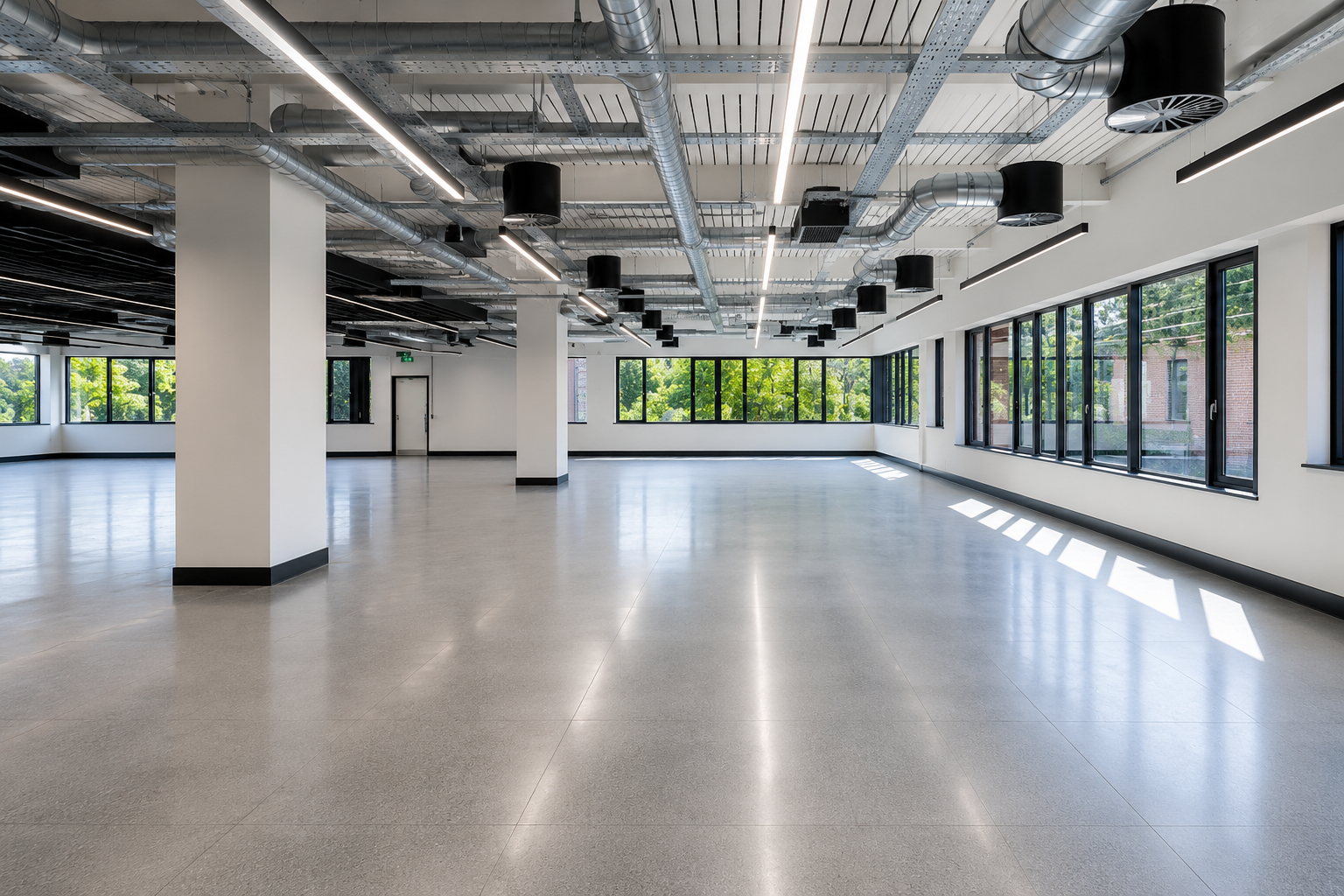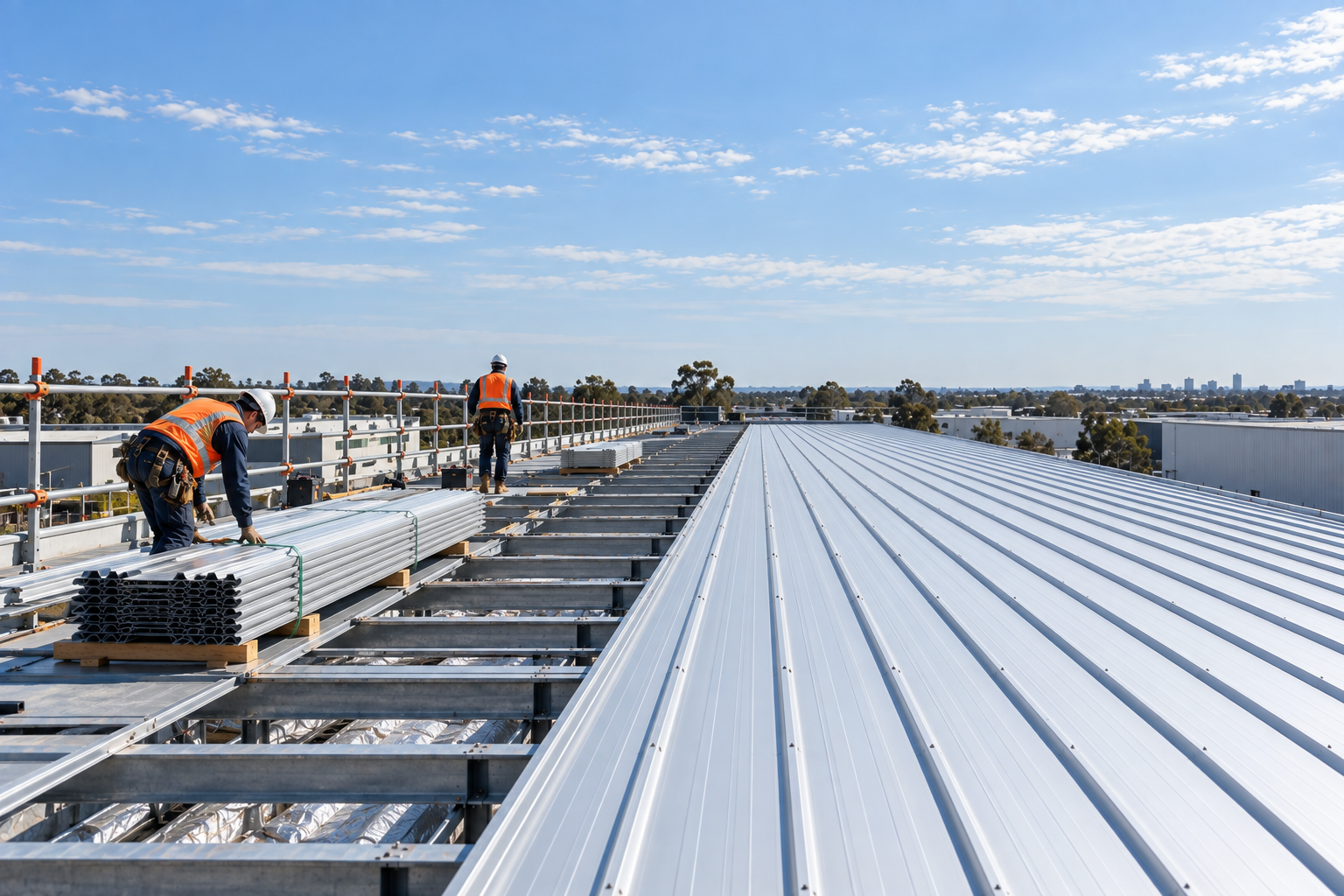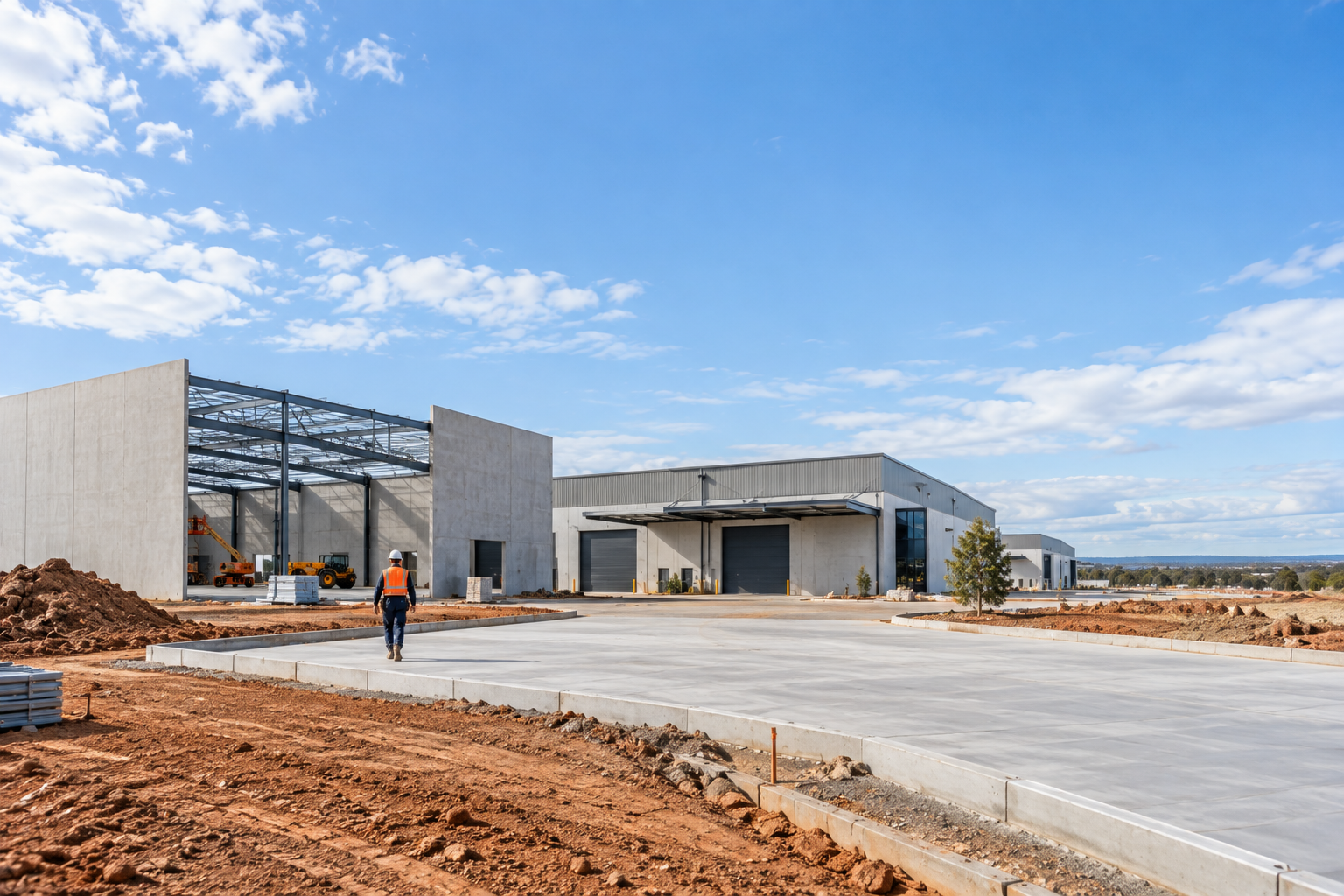


NSW will adopt the National Construction Code 2025 (NCC 2025) on 1 May 2027. The biggest technical changes target new commercial buildings, with tighter energy efficiency rules, mandatory on-site solar for most commercial classes, updated carpark fire safety, and a new all-gender sanitary facility pathway. NSW has set a 12-month transition from when the full code is published on 1 May 2026, and is applying its own state variations. If you are planning a commercial build, fitout or major upgrade across 2026 and 2027, the timing of your project now matters.
Key Takeaways
- NCC 2025 commences in NSW on 1 May 2027 (NSW Government, March 2026).
- The full NCC 2025 was published for adoption on 1 May 2026, starting a 12-month NSW transition.
- The most significant changes apply to new commercial buildings (Class 3 and Class 5 to 9).
- Commercial energy efficiency tightens sharply: the regulated energy allowance for a Class 5 office falls from 43 to 22 kJ/m².hr (ABCB).
- On-site solar PV becomes mandatory for Class 3 and Class 5 to 9 buildings.
- NSW is applying state variations, including waterproofing and apartment energy rules.
- Lead-free plumbing is an NCC 2022 requirement, not an NCC 2025 change. Certification and manufacture of non lead-free products ceased on 1 May 2026, and existing certified stock may still be installed until 30 April 2028.
What is the NCC and what is changing in 2025?
The National Construction Code is Australia's primary set of building standards, and NCC 2025 introduces major new provisions for the commercial construction sector. The code is published by the Australian Building Codes Board (ABCB) and covers health, safety, amenity, accessibility and sustainability for new building work. NCC 2025 focuses its most significant technical changes on new commercial buildings, alongside a smaller set of quality and safety improvements for residential building. (ABCB, 2026)
For a commercial building owner, the practical point is this. NCC 2025 raises the baseline for energy performance, on-site renewables and several amenity and fire-safety requirements. New work designed and certified under NCC 2025 will need to meet a higher standard than the same work under NCC 2022.
| Change area | NCC 2022 position | NCC 2025 position |
|---|---|---|
| Office (Class 5) energy use | Up to 43 kJ/m².hr | Up to 22 kJ/m².hr |
| Shop, restaurant, café (Class 6) energy use | Up to 80 kJ/m².hr | Up to 40 kJ/m².hr |
| On-site solar (Class 3, 5 to 9) | Not mandated | Mandatory solar PV |
| Open-deck carpark sprinklers | Limited | Sprinkler protection introduced |
| Sanitary facilities | Male / female | Optional all-gender pathway, up to 50% |
| Lead-free plumbing (an NCC 2022 change) | Introduced under Volume Three clause A5G4 | Unchanged by NCC 2025; installation transition ends 30 April 2028 |
Energy figures are the regulated energy consumption of conditioned space under Volume One clause J1P1 (ABCB, NCC 2025 and NCC 2022).
When does NCC 2025 start in NSW?
NCC 2025 commences in NSW on 1 May 2027, a full 12 months after the code becomes available for adoption. The ABCB published the complete NCC 2025 on 1 May 2026, and most states begin adoption from that date. NSW chose a 12-month transition period to give the construction industry more time to adjust while keeping homes and commercial projects moving. (NSW Government, 2026)
The Minister for Building, Anoulack Chanthivong, said the transition would "minimise future compliance risk by allowing industry to plan for the changes in the NCC 2025 and factor them into their new projects ahead of time." For owners, the transition window is the time to plan, not to wait.
How do the energy efficiency changes affect commercial buildings?
The energy efficiency changes are the largest in NCC 2025, and they roughly halve the regulated energy consumption allowed for conditioned space in new commercial buildings. Under NCC 2025 Volume One clause J1P1, the allowance falls from 43 to 22 kJ/m².hr for a Class 5 office building, and from 80 to 40 kJ/m².hr for a Class 6 building such as a shop, restaurant or café. NCC 2025 also introduces associated greenhouse gas emission caps of 2.2 and 4 g CO2-e/m².hr respectively. The changes bring tighter building-fabric requirements for insulation and glazing, and a stronger focus on operational greenhouse-gas emissions. (ABCB, 2026)
Note that Class 5 covers office buildings and Class 6 covers shops, restaurants and cafés, so an office fitout or refurbishment is assessed against the Class 5 figures.
These rules apply to new building work and significant upgrades, not to existing buildings left untouched. The implication for owners is that a major refurbishment or new fitout certified under NCC 2025 will need higher-performing glazing, insulation and services than the same project a few years earlier.
What are the new solar and renewable energy requirements?
NCC 2025 makes on-site solar photovoltaic (PV) systems mandatory for Class 3 and Class 5 to 9 buildings. This covers most commercial building types, including offices, shops, hotels, warehouses and healthcare buildings. The requirement is part of the code's push to cut operational emissions and support Australia's transition to net zero. (ABCB, 2026)
For a building owner, this means new commercial projects will need to allow roof space, structural capacity and electrical provision for a solar array. Factoring this in early avoids costly redesign late in a project.
What other commercial changes should owners know about?
Beyond energy, NCC 2025 updates carpark fire safety and sanitary facilities, each with practical cost and design implications. The changes below are the ones most likely to affect a commercial fitout, refurbishment or new build in NSW, along with one plumbing transition that is often mistaken for an NCC 2025 change.
- Carpark fire safety: NCC 2025 reduces the circumstances where fire-resistance concessions apply and introduces sprinkler protection for open-deck carparks, other than those that are separate buildings.
- Sanitary facilities: an optional pathway allows up to 50% of required male and female facilities to be provided as all-gender facilities, applied equally.
- Lead-free plumbing: this requirement sits in NCC Volume Three clause A5G4 and came in with NCC 2022, not NCC 2025. From 1 May 2026, only lead-free copper alloy products may be certified and manufactured for drinking water systems. The ABCB extended the installation transition, so existing WaterMark certified products may continue to be installed until 30 April 2028, subject to state and territory arrangements. (ABCB, 2026)
- Class 2 (apartments): the proposed Section J energy amendments will not proceed for Class 2 buildings, so NCC 2022 Amendment 2 remains applicable there.
What NSW variations apply to NCC 2025?
NSW will adopt NCC 2025 with its own state variations, which is normal practice and reflects NSW policy and legislation. The NSW Government has confirmed two variations so far. Apartment building owners undertaking remedial works will be able to choose the waterproofing requirements from either the current code or NCC 2025, which is intended to keep costs down. The new energy efficiency standards will also not apply to the common areas of apartment buildings. (NSW Government, 2026)
The full set of NSW variations will be confirmed when the complete NCC 2025 suite is published. Owners with projects spanning 2026 and 2027 should confirm which version of the code applies to their specific approval before committing to a design.
Common mistakes to avoid before NCC 2025 starts
The most common mistake is treating 1 May 2027 as a distant deadline rather than a planning trigger. Decisions made in 2026 on building services, glazing and roof layout will determine how easily a project meets NCC 2025, and late changes are expensive. The errors below are worth avoiding.
- Assuming the changes only affect new buildings from scratch, when major upgrades are also caught.
- Designing a refurbishment without allowing roof space or structural capacity for solar PV.
- Reading the Class 6 energy figures as the office benchmark, when offices are Class 5 and are assessed against 22 kJ/m².hr under NCC 2025.
- Re-specifying plumbing products earlier than needed, when existing WaterMark certified stock may be installed until 30 April 2028.
- Locking in a design without confirming whether NCC 2022 or NCC 2025 applies to the approval.
Frequently Asked Questions
When does NCC 2025 take effect in NSW?
NCC 2025 commences in NSW on 1 May 2027. The full code was published on 1 May 2026, and NSW applied a 12-month transition period before commencement to give the construction industry time to adjust. This is later than some other states, which adopt closer to the May 2026 publication date.
Does NCC 2025 apply to existing commercial buildings?
NCC 2025 applies to new building work and significant upgrades, not to existing buildings that are left unchanged. If you carry out a major refurbishment, fitout or new build that requires approval after commencement, the new requirements generally apply to that work. Routine maintenance does not trigger the new code.
What is the biggest change in NCC 2025 for commercial buildings?
The biggest change is energy efficiency. For a Class 5 office building, the regulated energy allowance for conditioned space roughly halves, from 43 to 22 kJ/m².hr. Class 6 buildings such as shops, restaurants and cafés fall from 80 to 40 kJ/m².hr. NCC 2025 also makes on-site solar mandatory for most commercial building classes and tightens insulation and glazing requirements.
Do I need solar panels under NCC 2025?
New Class 3 and Class 5 to 9 buildings will need on-site solar photovoltaic systems under NCC 2025. This covers most commercial building types. The requirement applies to new building work, so existing buildings are not forced to retrofit solar unless they undertake work that triggers the code.
Should I start my commercial project before or after May 2027?
The right timing depends on your project, not the date alone. Some owners will benefit from completing work under the current code, while others should design to NCC 2025 from the start to avoid reworking a project that straddles the change. The best step is to get advice on which code applies to your approval before you commit to a design.
Will NCC 2025 make commercial construction more expensive?
NCC 2025 is likely to add cost to some elements of new commercial work, particularly higher-performing glazing, insulation, services and mandatory solar. The size of the impact depends on the building type and design. Early planning and a fixed-price proposal are the clearest way to understand and control the cost for your specific project.
Disclaimer: This article is general information only and does not constitute legal, regulatory or professional advice. It does not replace advice specific to your building or project. The National Construction Code, NSW variations and their commencement can change, and how they apply depends on your project and approval. Confirm the requirements for your situation with the relevant authority or a qualified professional, and request a detailed quote before proceeding with any works.
Written by William Johnstone, Editor at Gladison Constructions. William edits Gladison's Construction Insights, drawing on the team's commercial construction experience across Sydney and NSW. Last updated: September 2026.