
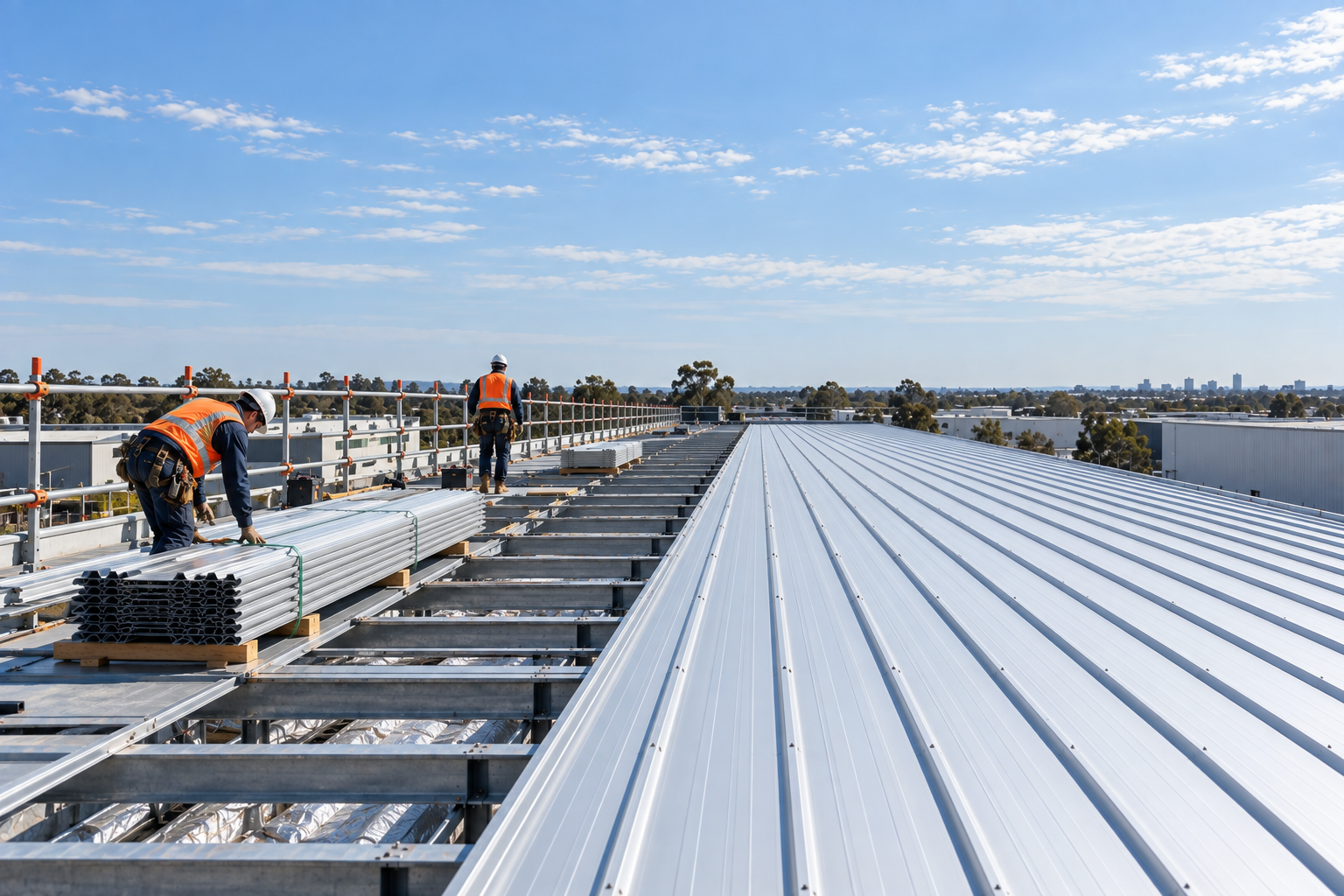
A commercial roof replacement in Sydney is priced per square metre, with metal roofing generally falling between roughly $90 and $200 per square metre in 2026, plus removal and disposal of the old roof at around $20 to $50 per square metre. Large, simple commercial and industrial roofs usually cost less per square metre than a complex house roof, because long spans mean less cutting and detailing. Beyond the cost, roof condition matters to your insurer: an old or poorly maintained roof can affect claims and premiums, which is why timely replacement is a commercial decision, not just a maintenance one.
Key Takeaways
- Metal commercial roof replacement in Sydney runs roughly $90 to $200 per square metre in 2026.
- Removing and disposing of the old roof adds about $20 to $50 per square metre.
- Large, simple commercial roofs cost less per square metre than complex roofs.
- Total cost depends on roof size, profile, access, height and structural condition.
- Insurers care about roof age and maintenance, which can affect cover and claims.
- A fixed-price proposal is the only way to get an accurate figure for your roof.
How much does a commercial roof replacement cost in Sydney?
A commercial roof replacement in Sydney costs roughly $90 to $200 per square metre for metal roofing in 2026, before removal of the existing roof. Colorbond and similar metal re-roofing in Sydney generally sits in this band, though the figure varies with roof complexity and labour. (What's The Damage, 2026) Commercial roofing is usually priced below a typical house re-roof per square metre, because large, simple spans mean less cutting and detailing per metre. (Yellow Pages, 2026)
Removing and disposing of the old roof adds around $20 to $50 per square metre, with metal usually cheaper to strip than tile. Scaffolding, flashings and any structural repairs are additional. Treat these as planning bands, not a quote.
| Cost element | Indicative figure | Notes |
|---|---|---|
| Metal roof replacement | $90 to $200 per m² | Varies with profile and complexity |
| Old roof removal and disposal | $20 to $50 per m² | Metal usually cheaper than tile |
| Scaffolding and access | Project-specific | Height and site access drive this |
| Structural repairs | Project-specific | Only if framing or purlins need work |
What drives the cost of a commercial roof?
Commercial roof cost is driven by size, profile, access and structural condition, more than by the roofing material alone. The same square-metre rate behaves very differently on a simple warehouse roof versus a multi-level building with restricted access. The drivers below move a commercial roofing budget most.
- Roof size and profile: large, simple roofs cost less per square metre; complex roofs with many penetrations cost more.
- Access and height: multi-storey buildings, restricted sites and safety requirements add scaffolding and labour.
- Structural condition: worn purlins or framing discovered during works add scope and cost.
- Disruption: keeping a building operational during re-roofing requires staging, which adds time.
- Specification: insulation, gutters, flashings and skylights all affect the final figure.
Why does your insurer care about your roof?
Your insurer cares about your roof because its age and condition affect the risk of water damage, storm claims and the cost of those claims. A failing or poorly maintained roof raises the chance of a claim, and insurers may take roof condition into account at renewal or when assessing a claim. For a building owner, a well-maintained or recently replaced roof is both a risk-management and a financial decision.
This is why roof replacement sits alongside insurance planning. Keeping evidence of maintenance and replacement helps when a storm claim arises, and a building with a sound roof is in a stronger position with its insurer. If a storm does hit, understanding how insurance rectification works after storm damage helps you act quickly.
When should a commercial roof be replaced rather than repaired?
A commercial roof should be replaced rather than repaired when repairs are frequent, the roof is near end of life, or leaks are widespread. Patching a roof that is fundamentally worn out wastes money and leaves the building exposed. The signs below point to replacement rather than another repair.
- Recurring leaks in multiple areas, not a single fixable point.
- Widespread corrosion or failing coatings across the roof sheets.
- Age beyond the expected service life of the material.
- Repeated repair bills that approach the cost of replacement over a few years.
- Insurance or compliance concerns raised about the roof's condition.
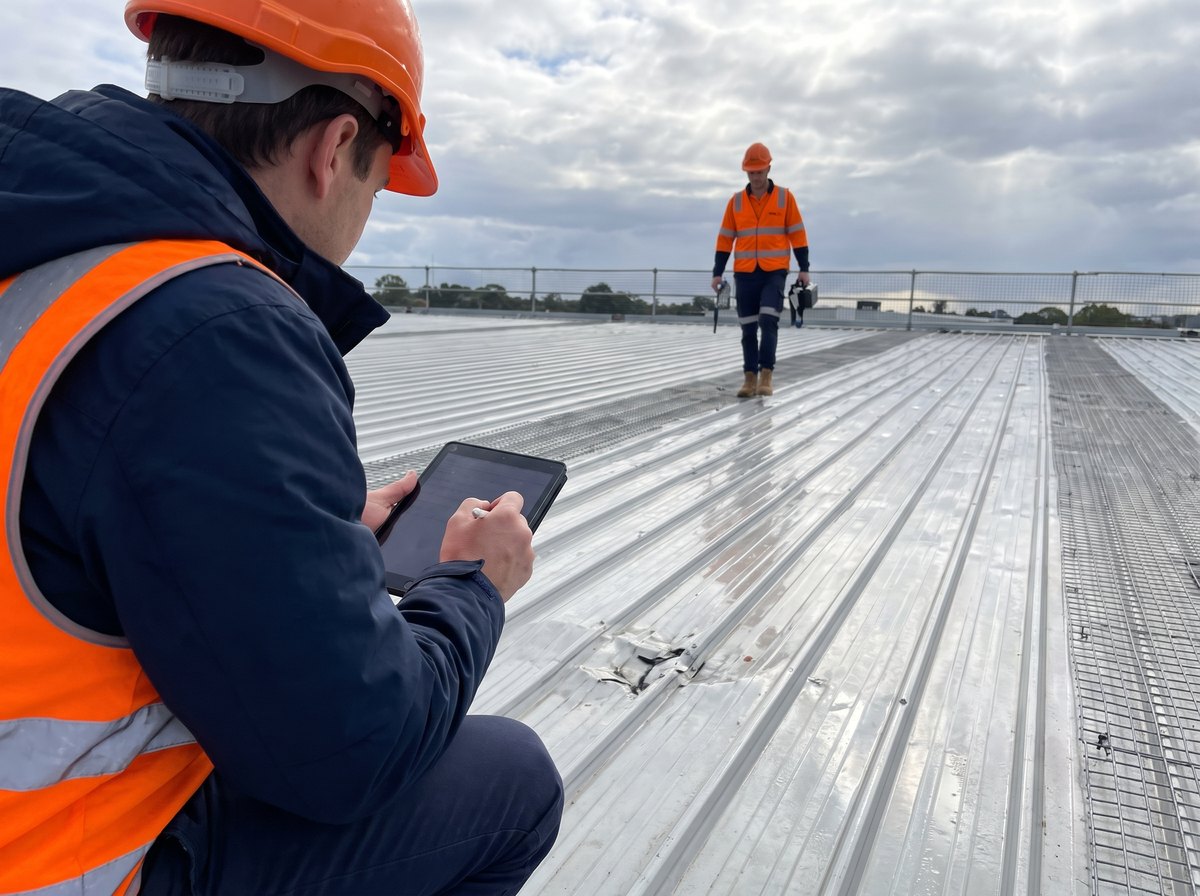
A roof inspection gives an owner the evidence to choose between repair and replacement with confidence, rather than guessing.
How can you manage a roof replacement with minimal disruption?
You manage a roof replacement with minimal disruption by staging the works, planning access and using one builder to coordinate everything. Most commercial buildings cannot simply close while the roof is replaced, so the programme must protect operations below. The approach below keeps a building running.
- Stage the works so sections are replaced while the rest of the building operates.
- Plan for weather with temporary protection to keep the interior dry during the job.
- Coordinate trades under one builder, so roofing, structural and services work align.
- Communicate the programme to tenants and staff so they can plan around it.
A single point of contact means the owner is not coordinating separate trades or chasing updates, and the cost is known up front through a fixed-price proposal. Our commercial roofing services in Sydney are delivered end to end under one builder. For ongoing care, planned and reactive building maintenance keeps a roof performing between major works.
Common commercial roofing mistakes
The most common mistake is repeatedly repairing a roof that has reached the end of its life. Repairs feel cheaper each time, but a worn-out roof keeps failing and the cumulative bill can exceed replacement. The errors below cost owners the most.
- Deferring replacement until a major leak damages the interior or stock.
- Budgeting only the roofing rate and forgetting removal, access and flashings.
- Ignoring the insurance implications of an ageing roof.
- Using separate trades with no single point of accountability for the result.
Frequently Asked Questions
How much does a commercial roof replacement cost in Sydney?
A commercial metal roof replacement in Sydney costs roughly $90 to $200 per square metre in 2026, before removal of the old roof. Removal and disposal add around $20 to $50 per square metre, and scaffolding, flashings and structural repairs are extra. Large, simple roofs cost less per square metre than complex ones.
Is commercial roofing cheaper per square metre than residential?
Commercial and industrial roofing is usually cheaper per square metre than a typical house re-roof. Large, simple spans mean less cutting and detailing per metre, which lowers the rate. However, height, access and structural condition can push a commercial job's total cost well up, so the per-metre rate is only part of the picture.
Why does my insurer ask about my roof?
Insurers ask about a roof because its age and condition affect the risk and cost of water and storm damage claims. A failing or poorly maintained roof raises that risk, and insurers may consider roof condition at renewal or when assessing a claim. Keeping a roof sound and documenting maintenance puts an owner in a stronger position.
Should I repair or replace my commercial roof?
Repair makes sense for isolated, fixable faults, while replacement is the better choice when leaks are widespread, corrosion is advanced, or the roof is near end of life. If repair bills are mounting year on year, replacement often costs less over time. A roof inspection gives the evidence to decide rather than guess.
Can a commercial roof be replaced while the building is occupied?
Yes, a commercial roof can usually be replaced while the building stays occupied, by staging the works and using temporary weather protection. The programme is planned so sections are replaced while the rest of the building operates. Clear communication with tenants and staff keeps disruption to a minimum.
How long does a commercial roof replacement take?
A commercial roof replacement timeline depends on roof size, profile, access and weather, ranging from days for a small simple roof to several weeks for a large or complex one. Staging around an occupied building extends the programme. A builder can give a realistic timeline after inspecting the roof and confirming scope.
Disclaimer: The figures in this article are general in nature and indicative of 2026 market ranges only. They are not a quote and do not replace a detailed, fixed-price proposal for your specific roof and building. Costs vary with roof size, profile, access, height and structural condition. The insurance information is general only and does not replace advice specific to your policy. Cover varies by insurer and policy, so confirm the details with your insurer, and request a quote from Gladison.
Written by William Johnstone, Editor at Gladison Constructions. William edits Gladison's Construction Insights, drawing on the team's commercial roofing and building experience across Sydney and NSW. Last updated: June 2026.