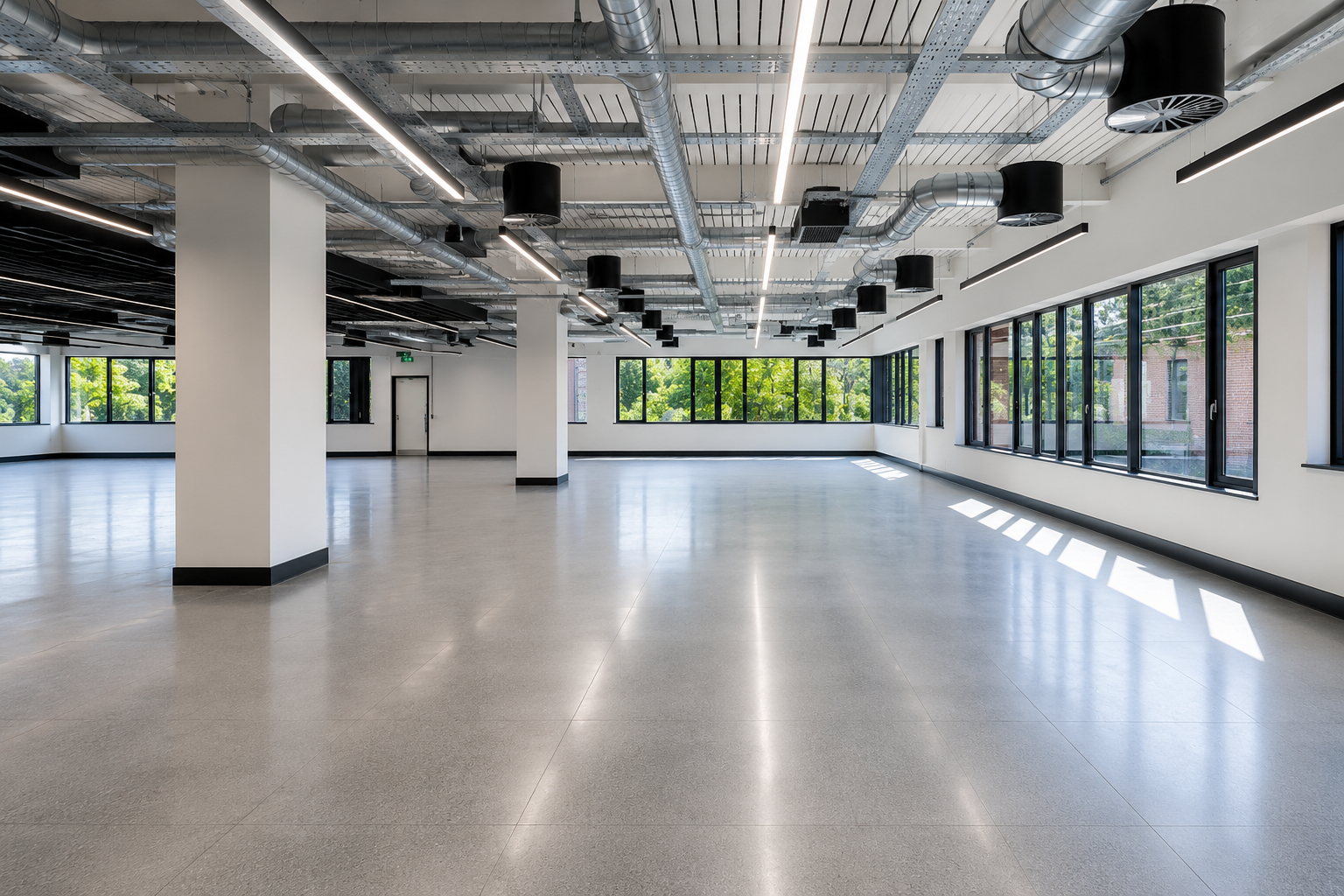

Cat A fitout is the base building finish delivered by the landlord — a functional but bare commercial space with raised floors, suspended ceilings, HVAC, fire services, and a basic lighting grid. Cat B fitout is the tenant's transformation of that space into a functioning, branded workplace — adding partitions, workstations, meeting rooms, a kitchen, reception, and all the elements that make an office operational. Understanding the difference matters because it determines who pays for what, what a tenant inherits when they sign a lease, and what they must return when they leave.
Gladison Constructions delivers Cat B fitouts and Cat A reinstatements for commercial tenants and building owners across Sydney, Parramatta, North Sydney, and regional New South Wales.
- Cat A fitout is funded by the landlord and delivers a vacant, functional base building space ready for a tenant's fitout.
- Cat B fitout is funded by the tenant (or via a landlord incentive) and transforms the Cat A shell into a working office.
- Cat A+ is an emerging standard where landlords deliver a more complete fitout — including some furniture and collaborative areas — to reduce a tenant's time-to-occupy and upfront capital expenditure.
- The division between Cat A and Cat B determines each party's maintenance and reinstatement obligations throughout the lease.
- At lease end, most tenants are required to strip back to Cat A condition as part of their makegood obligations.
- In Sydney's 2026 leasing market, Cat A fitout quality varies significantly between buildings and can affect a tenant's Cat B cost by $200–$500 per m².
What Is a Cat A Fitout?
A Cat A fitout is the base building standard delivered by a landlord before a commercial tenant takes possession. Cat A is not a furnished or fitted office — it is a blank but operational canvas that provides the infrastructure a tenant needs to begin their own fitout.
A standard Cat A fitout includes: a raised access floor providing a services void beneath the floor finish; a suspended ceiling grid with ceiling tiles; perimeter and internal HVAC distribution at a basic grid pattern; fire detection, fire suppression, and emergency lighting in a base building layout; a base lighting grid; power distribution to a base level; and amenities including toilets and a base level of bathroom finishes.
Cat A does not include workstations or furniture, internal partitions, kitchen or breakout facilities, communications cabling, feature finishes, branding, or any spatial planning specific to a tenant's operational needs. The cost of Cat A fitout is borne by the landlord and is typically included in the building's capital expenditure or accounted for in lease incentives.
What Is a Cat B Fitout?
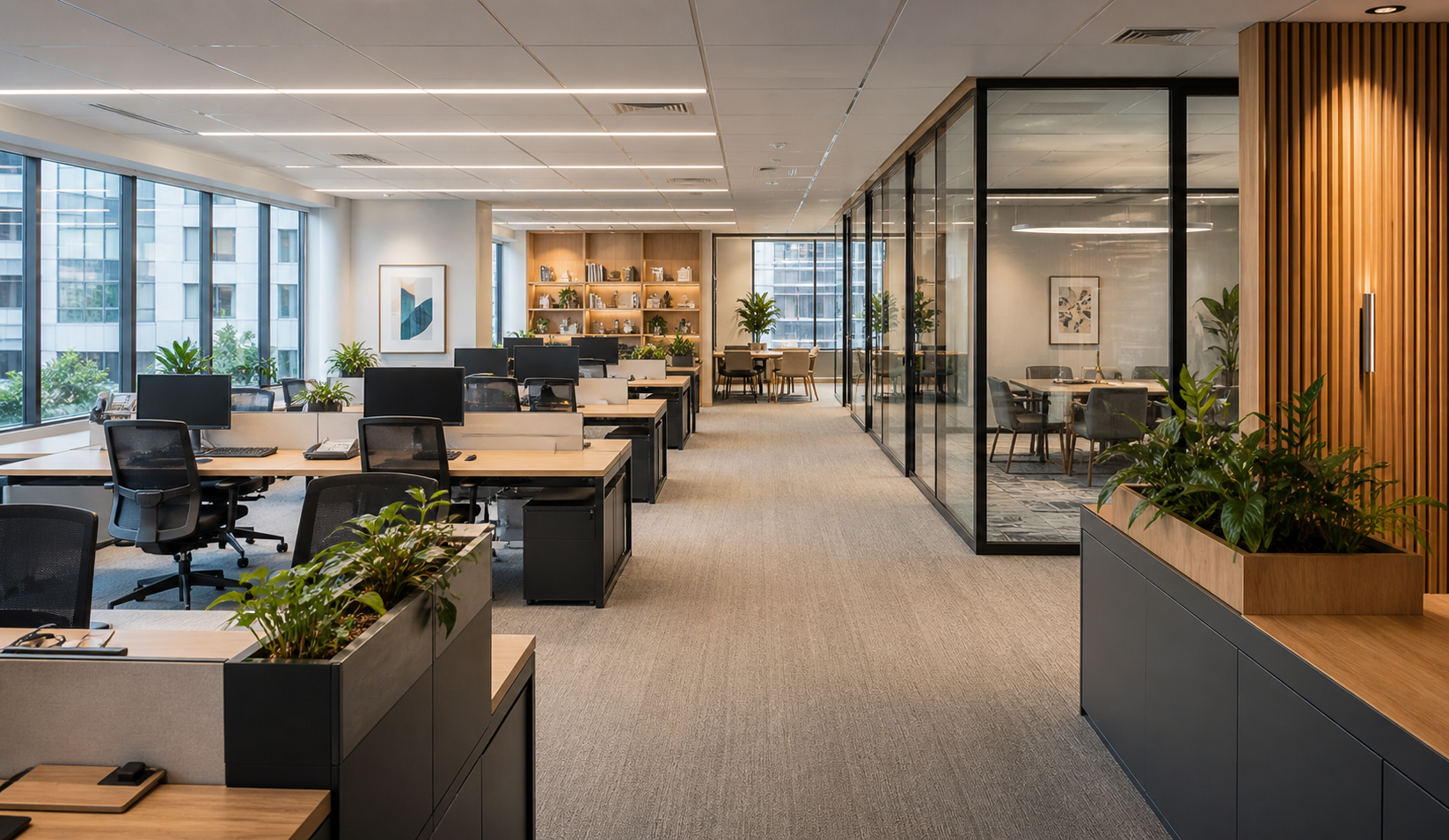
A Cat B fitout is the tenant's conversion of a Cat A shell into a functioning, purpose-designed workplace. Cat B fitout takes the base building canvas and adds everything a business needs to operate from the space.
A typical Cat B fitout includes: internal partitions and glazing to create meeting rooms and enclosed spaces; workstations, desks, and storage furniture; a kitchen, breakout area, and staff amenities; reception and front-of-house design elements; branded graphics, signage, and feature finishes; acoustic treatment; communications infrastructure; additional lighting; and any supplementary HVAC above the base grid.
Cat B fitout is typically funded by the tenant. In competitive Sydney leasing markets, landlords often offer a fitout incentive — a cash contribution, rent-free period, or both — to subsidise the tenant's Cat B works. Incentives in the Sydney CBD market as of 2026 have ranged from 10% to 25% of net face rent depending on building grade and lease length.
What Is Cat A+?
Cat A+ is a leasing strategy in which landlords deliver a more complete base building fitout to reduce a tenant's time-to-occupy and upfront capital commitment. As of 2026, Cat A+ is increasingly common in Sydney CBD, North Sydney, and Parramatta as landlords compete to attract tenants to vacant space.
A Cat A+ fitout typically includes everything in Cat A plus: a finished floor covering (usually carpet or LVT); feature lighting upgrades; a fitted kitchen or basic breakout area; some collaborative seating or furniture in common zones; higher-quality reception or entry finishes; and sometimes pre-installed workstations in an open-plan configuration.
How Do Cat A and Cat B Costs Compare in Sydney?
The following table shows typical 2026 Sydney commercial fitout cost ranges for Cat A, Cat A+, and Cat B, expressed per square metre of net lettable area.
| Fitout Category | Typical Cost Range (per m²) | Who Pays |
|---|---|---|
| Cat A | $300 – $600 | Landlord |
| Cat A+ | $600 – $950 | Landlord |
| Cat B (basic) | $800 – $1,400 | Tenant |
| Cat B (mid-spec) | $1,400 – $2,000 | Tenant |
| Cat B (high-spec) | $2,000 – $3,500+ | Tenant |
Cat B cost per m² is strongly influenced by the quality of the Cat A base. Partition density is the single largest variable in Cat B cost — an open-plan fitout costs significantly less than a highly partitioned fitout with glass-fronted meeting rooms and acoustic walls.
Who Is Responsible for What at Lease End?
At lease end, the tenant's makegood obligations typically require reinstatement of the Cat B works — removing or undoing the changes made during the Cat B fitout — to return the space to Cat A condition. This is the most commonly misunderstood aspect of the Cat A / Cat B distinction.
| Element | Category | Tenant Obligation at Lease End |
|---|---|---|
| Raised floor | Cat A (Landlord) | Restore if altered |
| Suspended ceiling | Cat A (Landlord) | Restore tiles/grid if altered |
| Base HVAC | Cat A (Landlord) | Remove supplementary units installed |
| Internal partitions | Cat B (Tenant) | Remove and make good |
| Kitchen / breakout | Cat B (Tenant) | Remove and make good |
| Branding / signage | Cat B (Tenant) | Remove and patch |
| Floor coverings | Cat B (Tenant) | Remove if base floor altered |
The extent of Cat B reinstatement is governed by the makegood clause in the lease. Some leases require full return to Cat A; others allow tenants to leave specific Cat B improvements at the landlord's election. Tenants should clarify this in the lease and any fitout deed before commencing Cat B works.
Frequently Asked Questions
Q: What is the difference between Cat A and Cat B fitout?
A: Cat A fitout is the base building finish delivered by the landlord — providing a blank, functional space with raised floors, suspended ceilings, HVAC, fire services, and basic lighting. Cat B fitout is the tenant's conversion of that space into a working office, adding partitions, furniture, kitchen, branding, and all operational elements. The landlord funds Cat A; the tenant funds Cat B, typically with a lease incentive from the landlord contributing to the cost.
Q: How much does a Cat B office fitout cost in Sydney?
A: A Cat B office fitout in Sydney costs between $800 and $3,500+ per square metre depending on specification level. A basic, functional open-plan fitout runs $800–$1,400/m². A mid-spec fitout with meeting rooms, glass partitions, and a quality kitchen typically costs $1,400–$2,000/m². A high-spec fitout with premium finishes, feature lighting, acoustic treatment, and executive spaces runs $2,000–$3,500/m² or more.
Q: Does a tenant have to remove their fitout when they leave?
A: In most commercial leases in NSW, the tenant is required to remove their Cat B fitout and return the premises to Cat A condition as part of their makegood obligations. The exact scope of removal is defined in the makegood clause and any fitout deed. Tenants who do not complete makegood works may face a claim from the landlord for the cost of completing those works.
Q: What is Cat A+ fitout?
A: Cat A+ fitout is a more complete base building delivery where the landlord goes beyond standard Cat A to include a finished floor covering, upgraded lighting, a fitted kitchen or breakout area, and sometimes collaborative furniture. Cat A+ is increasingly offered by Sydney landlords as a way to reduce tenant fitout costs, shorten the time from lease signing to occupation, and attract tenants in a competitive market.
Q: Who pays for a Cat A fitout?
A: Cat A fitout is paid for by the building owner or landlord. The cost is typically treated as a capital expenditure on the building, recovered through rent over the lease term. In some transactions, the landlord includes Cat A works as part of a lease incentive package to attract a specific tenant or bring an older building up to current market standard.
Q: Can a tenant negotiate who pays for Cat B fitout?
A: Yes. In most Sydney commercial lease negotiations, the tenant negotiates a fitout incentive — either a cash contribution from the landlord, a rent-free period, or a combination of both — to subsidise the Cat B fitout cost. Incentives in the Sydney CBD market as of 2026 have ranged from 10% to 25% of net face rent depending on building grade and lease length.
Disclaimer: The figures in this article are general in nature and indicative of 2026 market ranges only. They are not a quote and do not replace a detailed, fixed-price proposal for your specific space and project. Costs vary with scope, building access, site conditions and specification. For an accurate price, request a quote from Gladison.
Written by William Johnstone, Editor at Gladison Constructions. William edits Gladison's Construction Insights, drawing on the team's commercial fitout experience across Sydney and NSW. Last updated: June 2026.