
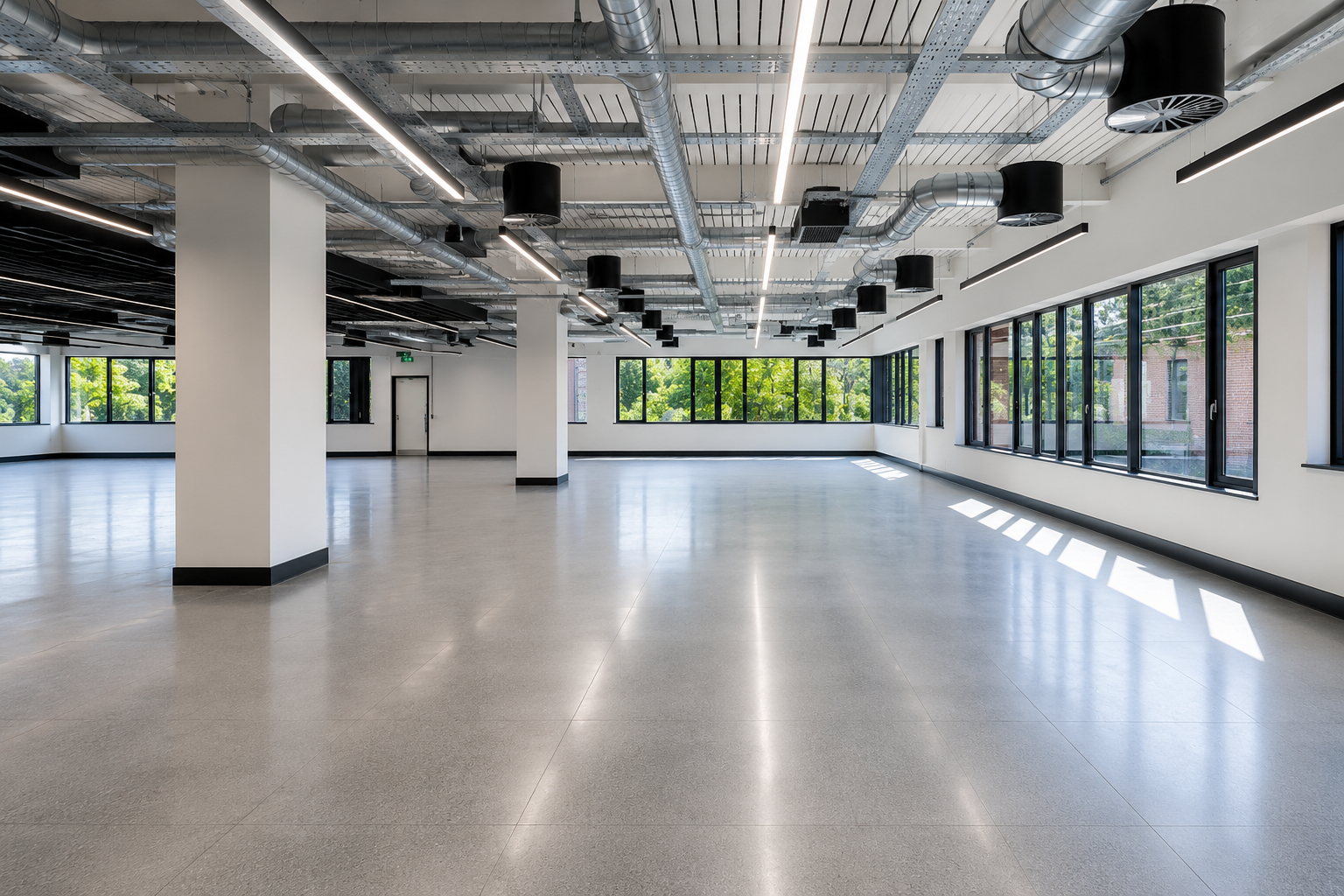
A commercial strip-out is the demolition and removal of fitout elements, services, and finishes from a commercial tenancy or building. Strip-out works remove partitions, ceilings, raised floors, joinery, mechanical and electrical services, and floor coverings — leaving the base building structure ready for makegood handback, a new fitout, or a full refurbishment. In New South Wales, commercial strip-outs are carried out by a licensed builder, and any asbestos-containing materials discovered or suspected during the works must be managed in accordance with SafeWork NSW requirements.
Gladison Constructions delivers commercial strip-outs for tenants, building owners, and developers across Sydney, Parramatta, North Sydney, and regional New South Wales — from single-tenancy strip-backs to whole-building demolitions.
- A commercial strip-out removes tenant fitout, services, and finishes to return premises to base building or slab-and-structure condition.
- Strip-outs are required for three main purposes: lease-end makegood, pre-refurbishment demolition, and pre-demolition building preparation.
- Asbestos management is a critical compliance requirement for strip-outs in any NSW building constructed or fitted out before 1990.
- A typical Sydney CBD commercial strip-out is estimated to cost between $50 and $150 per m², depending on fitout density, floor level, and asbestos status.
- A 500 m² Sydney office strip-out takes two to four weeks from mobilisation to completion, subject to building access, asbestos findings, and waste removal logistics.
- All commercial demolition waste in NSW must be managed under an approved waste management plan and disposed of at licensed facilities.
What Is a Commercial Strip-Out?
A commercial strip-out is the systematic demolition and removal of all fitout elements from a commercial property — leaving behind the base building fabric, which includes structural slabs, columns, perimeter walls, windows, and base building services infrastructure. Strip-out works are the inverse of fitout: where a fitout builds out and furnishes a space, a strip-out removes everything that was added.
The elements removed depend on the scope agreed between the contractor and the client. A full strip-out removes everything down to the bare slab and structure. A partial strip-out targets specific fitout elements — for example, removing internal partitions and ceilings but leaving raised floors and services in place for reuse. Commercial strip-outs are distinct from building demolition, which involves removing structural elements or the entire building.
When Is a Commercial Strip-Out Required?
Lease-end makegood is the most common trigger. When a commercial tenant vacates a leased premises, most NSW commercial leases require the tenant to remove their fitout and return the premises to the landlord in a specified condition. The scope of the makegood strip-out is determined by the lease — most commercial leases require return to Cat A base building condition.
Pre-refurbishment demolition is required when an existing fitout must be cleared before a new fitout or refurbishment can commence. A building owner refurbishing a floor for a new tenant, or a tenant undertaking a major refurbishment, will strip out the existing fitout before construction of the new works begins. Pre-refurbishment strip-outs are often more extensive than makegood strip-outs — removing base building services that will be replaced as well as the tenant fitout.
Pre-demolition building preparation involves stripping an entire building of all fitout, services, and internal finishes before structural demolition commences. Under SafeWork NSW regulations, a building must be stripped of all hazardous materials — including asbestos, lead-based paint, and synthetic mineral fibre — before structural demolition.
What Does a Commercial Strip-Out Involve Step by Step?
A commercial strip-out follows a defined sequence to manage safety, waste, and building access.
| Stage | Activity | Notes |
|---|---|---|
| 1. Pre-works survey | Asbestos survey, services isolation assessment, structural review | Mandatory before commencing in any building pre-1990 |
| 2. Approvals | Building notification, heritage consent (if applicable), waste plan | Local council or building management notification |
| 3. Services isolation | Electrical isolation, hydraulic capping, mechanical decommissioning | Carried out by licensed trades |
| 4. Fitout demolition | Removal of partitions, ceilings, joinery, raised floors | Sequential from top-down: ceiling, walls, floor |
| 5. Asbestos removal | Licensed removal of identified ACMs, air monitoring, clearance certificate | Required before further works if ACMs found |
| 6. Services removal | Removal of cabling, plumbing, mechanical ducts as required by scope | Licensed trades for hydraulic and electrical |
| 7. Waste removal | Skip bins, hoist loads, or building goods lift for waste removal | Must be disposed of at licensed NSW facilities |
| 8. Clean and make-safe | Removal of debris, patching structural fixings, cleaning | Preparation for handback inspection or next works |
| 9. Inspection | Landlord, certifier, or client inspection to confirm scope completion | Final sign-off before handback or next-stage commencement |
The top-down sequence — ceiling first, then walls, then floors — is the industry-standard approach for commercial strip-outs. Starting at ceiling level allows concealed services to be identified and isolated before walls and floors are removed, reducing the risk of unintended service strikes.
What Happens to Asbestos in a Commercial Strip-Out?
Asbestos management is a mandatory requirement for any commercial strip-out in NSW where the building was constructed or refurbished prior to 1990. SafeWork NSW regulations require an asbestos register to be maintained for all commercial buildings, and a specific asbestos management plan to be in place before any demolition or refurbishment work commences.
Asbestos-containing materials (ACMs) commonly found in pre-1990 Sydney commercial buildings include: floor tile adhesive (black mastic adhesive under vinyl floor tiles); textured ceiling coatings such as vermiculite spray or fibrous plaster; lagging on hot water pipes and mechanical ductwork; fire-rated panels and door surrounds; and roofing materials including super-six sheeting in industrial or commercial buildings.
Class A asbestos (friable) must be removed by a Class A licensed asbestos removalist. Class B asbestos (non-friable) may be removed by a Class B licensed asbestos removalist. Air monitoring must be conducted during removal, and a clearance certificate issued by an independent hygienist before non-licensed workers can re-enter the area. The cost of asbestos removal ranges from $5,000 for a minor ACM removal to $40,000 or more for extensive friable asbestos in a large-floor pre-1990 building.
How Much Does a Commercial Strip-Out Cost in Sydney?
Commercial strip-out costs in Sydney are priced on a per-m² or lump-sum basis, depending on fitout density and scope.
| Strip-Out Type | Cost Per m² | Typical Total (500 m² floor) |
|---|---|---|
| Light strip-out (low-density fitout) | $50 – $80 | $25,000 – $40,000 |
| Medium strip-out (standard office density) | $80 – $120 | $40,000 – $60,000 |
| Heavy strip-out (high-density, services-rich) | $120 – $200 | $60,000 – $100,000 |
| Pre-demolition full strip | $150 – $300+ | $75,000 – $150,000+ |
High-rise buildings with limited goods lift access carry a 15–25% access premium. As of 2026, waste disposal costs in NSW have increased materially — a 500 m² strip-out generates approximately 30–50 tonnes of waste, with disposal costs of $180–$400 per tonne for mixed construction waste. Confirm whether waste disposal is included or charged separately in any quotation received.
How Long Does a Commercial Strip-Out Take?
A commercial strip-out in a Sydney CBD office building takes one to four weeks for a standard single-floor tenancy, depending on fitout density, floor area, building access, and whether asbestos is found. The key time variables are asbestos management (adds 3–10 days if ACMs are found); goods lift access (floors above level 15 in buildings with shared goods lift access typically take 20–30% longer); and scope — a full strip to slab including services removal takes longer than a partition-and-ceiling-only strip.
Pre-strip survey and approvals take one to two weeks before physical works commence. Factoring in survey, mobilisation, construction, and waste removal, a total programme of three to six weeks from instruction to completion is typical for a 300–600 m² Sydney office strip-out.
Frequently Asked Questions
Q: What is a commercial strip-out?
A: A commercial strip-out is the demolition and removal of fitout, services, and finishes from a commercial tenancy or building. Strip-out works remove partitions, ceilings, raised floors, joinery, cabling, and floor coverings to leave the base building structure ready for a new fitout, a refurbishment, or a landlord handback. Strip-out is the physical component of most commercial makegood obligations in NSW.
Q: How much does a commercial strip-out cost in Sydney?
A: A commercial strip-out in Sydney costs between $50 and $200+ per m² depending on fitout density, floor level, and scope. A standard 500 m² Sydney CBD office strip-out costs $40,000–$80,000 for construction demolition. Asbestos management, if required, is additional. Waste disposal costs of approximately $180–$400 per tonne are either included in the rate or charged separately.
Q: How long does a commercial strip-out take?
A: A commercial strip-out of a standard 300–600 m² Sydney office tenancy takes one to four weeks of active construction, plus one to two weeks for pre-strip survey and approvals. Total programme from instruction to completion is typically three to six weeks. Asbestos management, if required, adds three to ten days.
Q: Does a commercial strip-out require a building permit?
A: Most commercial strip-outs in NSW require at minimum a building notification and a waste management plan. Works that affect structural elements, fire services, or building systems may require a Construction Certificate or CDC under the Environmental Planning and Assessment Act 1979 (NSW). An asbestos management plan is required under SafeWork NSW regulations for any works in buildings constructed or refurbished before 1990.
Q: Who is responsible for a commercial strip-out — the tenant or the landlord?
A: In most NSW commercial leases, the tenant is responsible for removing their fitout as part of their makegood obligations. The scope of removal is defined in the lease. The landlord is responsible for base building services and structure, which are not removed in a standard makegood strip-out. Pre-refurbishment or pre-demolition strip-outs are funded by the building owner or developer.
Q: Is asbestos common in Sydney commercial buildings?
A: Asbestos is common in Sydney commercial buildings constructed or refurbished before 1990. A full ban on asbestos products took effect on 31 December 2003. Buildings constructed before 1990 should be assumed to contain ACMs until an asbestos survey confirms otherwise. SafeWork NSW requires all commercial buildings to maintain an asbestos register.
Q: Can a strip-out be done while the building is occupied?
A: A strip-out can be carried out in a building where other floors are occupied, but requires strict isolation of the works area, dust and noise management, and coordination with building management for goods lift access and waste removal. Works involving asbestos removal must be fully isolated and cannot proceed in areas accessible to building occupants until clearance certification is obtained.
Disclaimer: The figures in this article are general in nature and indicative of 2026 market ranges only. They are not a quote and do not replace a detailed, fixed-price proposal for your specific space and project. Costs vary with scope, building access, site conditions and specification. For an accurate price, request a quote from Gladison.
Written by William Johnstone, Editor at Gladison Constructions. William edits Gladison's Construction Insights, drawing on the team's commercial fitout experience across Sydney and NSW. Last updated: June 2026.